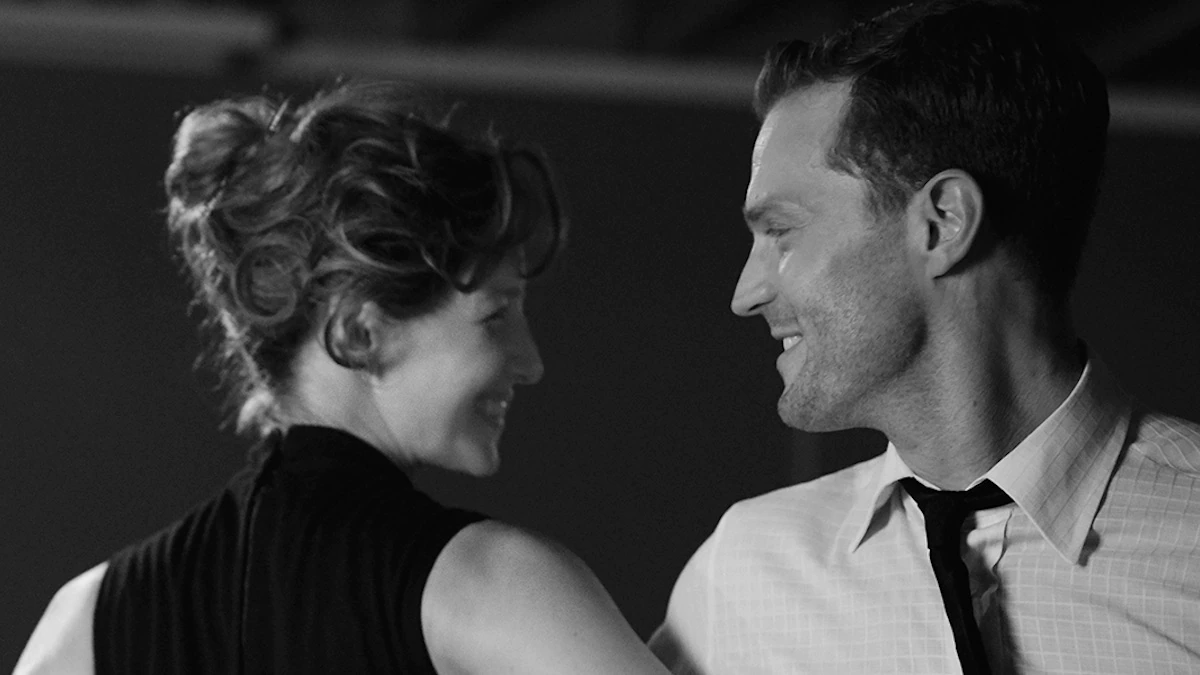
The Train
Paris, August 1944. With the Allied army closing in, German commander and art fanatic Colonel von Waldheim (Paul Scofield) steals a vast collection of rare French paintings and loads them onto a train bound for Berlin. But when a beloved French patriot is murdered while trying to sabotage von Waldheim’s scheme, Labiche (Burt Lancaster), a stalwart member of the Resistance, vows to stop the train at any cost. Calling upon his vast arsenal of skills, Labiche unleashes a torrent of devastation anddestructionloosened rails, shattered tracks and head-on collisionsin an impassioned, suspense-filled quest for justice, retribution and revenge. Inspired by an actual event and highlighted by spectacular stuntwork and visual effects, The Train is “an edge-of-your-seat, thrilling, suspenseful and superior film” (The Motion Picture Guide).This is one of John Frankenheimer’s breathless gems–all marvelous action that never lets up. Burt Lancaster plays a French train engineer during the waning day
List Price: $ 14.98
Price: $ 7.93
New York New York [Blu-ray]
Studio: Tcfhe/mgm Release Date: 06/07/2011 Rating: PgMartin Scorsese took a daring turn from the mean streets that made his reputation in the early ’70s with New York, New York, his homage to the big-band era. And what an homage it is: the dazzling production design by Boris Leven continues to impress over the film’s nearly three-hour length. And there’s no denying the anthemic appeal of Kander and Ebb’s title song, belted with winning bravado by costar Liza Minnelli in a showstopping finale. But as valiantly as Minnelli and Robert De Niro try, they can’t elevate the shaky plot beyond its two-dimensional construct. It purports to be a Star Is Born-like tragedy of colliding careers, but too often it feels like inadvertently eavesdropping on a marriage counselor’s most truculent clients. (There are times you want someone–anyone–to slap Minnelli upside the head with a copy of Women Who Love Too Much.) For diehard Minnelli (or Scorsese) fans only. –Anne Hurley
List Price: $ 19.99
Price: $ 11.48
Top MOvie Today
Life Cycles DVDFrom the first images leaking out of Life Cycles’ editing bays, it’s easy to see this will be a film like no other: Cam McCaul bac…
Xbox DVD Movie Playback KitThe Xbox DVD Movie Playback Kit helps you say goodbye to messy cable knots and weird controllers — just pop in your DVD and watch…
« Helen Mirren Gets Angry in Scenes From ‘The Debt’ (Moviefone Exclusive) Police Call Off Search For Missing Woman In Aruba »


I don’t think this is going to be the Ultimate Edition either,
I’ll start by rephrasing what I said about the last DVD edition
Even the non Special Edition of Boxcar Bertha from the Martin Scorsese Collection was presented in Widescreen , but alas New York, New York was only Letterboxed.
It only included the so called restored version of the film which is in reality only one of three versions released.
If any film is more deserving than The Abyss for a “watch it the way you want to” DVD release it’s New York, New York.
The deleated / alternate scenes included did not represent the differences between the first and third versions of the film, nor do they include the scenes deleted from the first release to shorten the running time for the second run release.
The Laserdisc Special Edition release had more bonus material than was included on that DVD.
Guess we’ll have to wait for the Ultimate Edition Boxed set for a truely special edition .
In the meantime this one will due.
Oct 2007: Pre – order pages are appearing for New York, New York: 30th Anniversary Edition, Reportedly 2 discs. Hopefully it’s a vast improvement on the last one.
Details are starting to appear :
Features
Region 1
Keep Case
Anamorphic Widescreen
Audio:
Mono – English, Spanish
Dolby Surround 5.1 – English
Subtitled – English, French, Spanish – Optional
Additional Release Material:
Disc 1: NEW YORK NEW YORK – Feature Presentation
Alternate Scenes – 1. Alternate Takes
2. Deleted Scenes
Audio Commentaries – 1. Martin Scorsese – Director
2. Carrie Rickey – Film Critic
Introduction – Martin Scorsese – Director
Trailers – 1. Theatrical Trailer
2. Teaser Trailer
3. MGM/UA Previews
Text/Photo Galleries:
Galleries – 1. French Lobby Cards
2. Original Posters
Stills/Photos – 1. Filmmakers, Cast & Crew
2. On Set
3. Research Photos
Storyboards
Disc 2: NEW YORK NEW YORK – Supplemental Material
Additional Release Material:
Audio Commentaries – Lazlo Kovacs, ASC – Cinematographer (Select Scenes)
Featurettes – 1. “The New York, New York Stories” Part One
2. “The New York, New York Stories” Part Two
3. “Liza on NEW YORK NEW YORK”
It still may not be the Ultimate Edition this film should have but in the meantime this one will due.
Sadly latest news is it’s the same version ( so called director’s cut)as the last release only and even the “Liza on New York New York” is abridged.
Only 5:35 minutes from a 30 minute segment done for an overseas release taped November 10th, 2003.
Shame on them.
Was this review helpful to you?
|Often Brilliant In Spite of Major Flaws,
Released in 1977, Martin Scorsese’s NEW YORK, NEW YORK instantly divided critical response–and, facing box office competition from no less than STAR WARS, proved a major financial failure. A significantly edited re-release followed not long afterward but proved even less well received and even less profitable. Although a double VHS release eventually brought the film to the home market, the film remained unpopular and made barely a ripple in public consciousness. In 2005, however, NEW YORK, NEW YORK received an unexpected release to DVD. At long last it may begin to reach a significant audience.
As a story, NEW YORK, NEW YORK draws from a number of oddly “Noir-ish” musicals made at Warner Bros. in the late 1940s. Most particularly, according to Scorsese’s commentary, it drew from MY DREAM IS YOURS, a film that not only starred Doris Day but actually reflected her life in its tale of a talented big band “girl singer” trapped in an abusive marriage with a musician. Although the film force-fed the audience a happy ending, later films would not. In the mid-1950s, Doris Day’s LOVE ME OR LEAVE ME and Judy Garland’s A STAR IS BORN offered stories of a gifted female vocalists locked into disastrous romances that played out to a very distinctly unhappy ending, and NEW YORK, NEW YORK draws from them as well.
Scorsese not only repeats the basic stories and themes of these films, he also repeats the artificially heightened visual style typical of Hollywood films of the 1940s and 1950s–it is no accident that Liza Minnelli looks and sings remarkably like mother Judy Garland in this film–but he does so to an entirely unexpected end. The bravado performing style of such films is completely snatched away, and the characters are presented in an almost documentary-like realism. In theory, each aspect of the film would emphasize the other; in fact, however, this was precisely what critics and audiences disliked about the film when it debuted. They considered it extremely grating.
But perhaps the passage of time has opened our eyes on the point. I saw NEW YORK, NEW YORK in its 1977 release and, music aside, I disliked it a great deal. I expected to retain that opinion when I approached the DVD release, but I was greatly surprised. It holds up remarkably well, and most of the time the balance of artifice and reality works very well. But there are significant flaws. In a general sense, the film has a cold feel to it that occasionally becomes so downright chilly you begin to detach from it. But even more difficult is the character of Jimmy Doyle, the abusive husband of the piece.
In his commentary, Scorsese notes that both he and actor Robert De Niro sought to push the character far beyond the extremes of MY DREAM IS YOURS, LOVE ME OR LEAVE ME, or A STAR IS BORN. They were perhaps more successful than they expected. The result is a character you actively do not want to watch or hear, and although we are eventually allowed to see beyond his annoying qualities that moment comes much too late in the film to make him acceptable in any significant way. It makes for more than one bout of uphill viewing.
Even those who didn’t like the film in 1977 agreed that it looked good and the music was great, and although it isn’t entirely ideal the DVD presentation is quite fine. Scorsese’s introduction and commentary are excellent; he is, however, augmented by film critic Carrie Rickey, and while her remarks are often interesting they are a shade to academic in tone for consistent interest. The film has received a director’s cut that restores the edits made for the second release as well as the “Happy Ending” number cut before the debut release, so the deleted scenes hold no great treasure; even so, they are interesting to watch.
Overall, I recommend the film–but it is very much a “Hollywood Insider” film that is probably best left to those who know a great deal about film history and who can recognize the numerous antecedents from which it draws.
GFT, Amazon Reviewer
Was this review helpful to you?
|Renoir, Cezanne, Degas, Matisse, , …,
John Frankenheimer’s “The Train” is an outstanding Black and White WWII (“action”) film from the unforgettable 60′s, when much emphasis was placed on good acting and characterization.
Close to the end of the war, while withdrawing, the Nazis attempted to lute famous French museums, and transport to Germany art treasures, hundreds of paintings of world fame – part of France’s national identity. Among many popular French performers, such as Michel Simon (“Le diable et les dix commandements”) and Jeanne Moreau (“Jules et Jim”) – remember ? we’ve seen her in Beson’s “La Femme Nikita”) shine America’s unforgettable Burt Lancaster as Labiche, the French “cheminot” who opposes England’s Paul Scofield, perfectly cast as von Waldheim, the German colonel obsessed with “his mission” to “save” the painting by having them transported by train from Paris to Berlin.
Real life adventure with a believable plot, attention to details, image, dialogues, and ever growing tension until the final “denouement”. It’s the same director who gave us the more recent “Ronin” (filmed in France), and classics, such as “Seven Days in May” (also with Burt Lancaster) and “The Manchurian Candidate”, and, if want to see more of Paul Scofield, consider watching one more time, Fred Zinneman’s “A Man of All Seasons”.
Very good DVD rendition of a truly great film from John Frankenheimer !
Was this review helpful to you?
|Perhaps Frankenheimers Best,
Fankenheimer is a director’s director – something of an icon in contemporary American Film. He has worked with the best, and has made some of the most innovative and intelligent movies of the last forty years. While always a director of “smart” films, he mastered the action-film early in his career and to a certain extent this has over-shadowed his deeper (and darker) side.
On a superficial level “The Train” is the last of the “full-scale” action films. They blow up everything in sight for real, they crash real steam-locomotives, and many of the actors are doing their own stunts. In fact Burt Lancaster not only does all his own stunts, he stands in for other actors too!
But unlike most action-flicks, “The Train” goes deeper. Lancaster plays the French resistance leader asked to stop Nazi Colonel Paul Schofeild from leaving Paris with a train load of paintings. “Let them have the paintings,” Lancaster replies. He doesn’t see the point in risking anyone’s life for a work of art. “But they are the soul of France”. And this is where the real interest (and the subtext) starts.
Imagine your house is on fire. You run inside and you can save your favorite pet, or the Van Gogh hanging on the wall. What do you choose? Well that’s the thesis behind “The Train” – why are these paintings worth dying for? Why are they worth killing for? (Incidentally Lancaster took a similar position a few years later in “Castle Keep”). Lancaster could care less about the paintings. And Schofeild will kill anyone and anything that tries to stop him leaving with them. Not only is it a clash of cultures, it’s a clash about culture. A Nazi kills to save the artwork his own ideology has called degenerate; a partisan kills to save the art he has never wanted to see.
The DVD has an excellent commentary by Frankenheimer. He describes the behind the scenes action, the difficulties and joys of this production, the demolishion of locomotives (and cameras), and the joys of working with Burt Lancaster. And he’s very articulate about it. The DVD is also in the original wide-screen aspect, opening up the image considerably.
If you’re a fan of the war film or the action genre, The Train is a must have. And if oyu just like good film making, then it’s still a must see.
Was this review helpful to you?
|Frankenheimer’s Overlooked Classic: The Best Action Film,
When Burt Lancaster called on director John Frankeheimer yet again to rescue another picture from another director who had left the project, the call took Frankenheimer to Paris to bring his brilliant black and white extreme depth of focus shots to bear on thought provoking subject matter.
La Bisch, the unwilling resistance man late in WWII (Lancaster) is pitted despite his objections against a cultured German general who is attempting to take every painted masterpiece out of Paris that can be found.
Knowing that delays to shipment in the face of the german retreat and allied advance, La Bisch uses both ingenuity and enormous physical effort to attempt to block the movement of a train laden with stolen art, eastbound from Paris.
The plot twists are the stuff of legend, and each twist provokes controversial positions regarding the importance of art and the brevity of human life.
The long shot action scenes in this film are brilliant, and Lancaster, who was injured during filming, performs much of the extraordinary scenes in the movie with a real (not feigned) limp.
Fine ensemble cast, including many of the best French character actors of the time, a serious script saved by brevity from the melodramatic and arguably the best camerawork and editing of any action film in history (you read right) make this film superior to Frankenheimer’s other B&W films from the period (e.g., The Manchurian Candidate and even The Birdman of Alcatraz).
The Train belongs in any serious English language cine collection. This is one of the top 100 films of all time.
Was this review helpful to you?
|